Making · Field
Growing and harvest
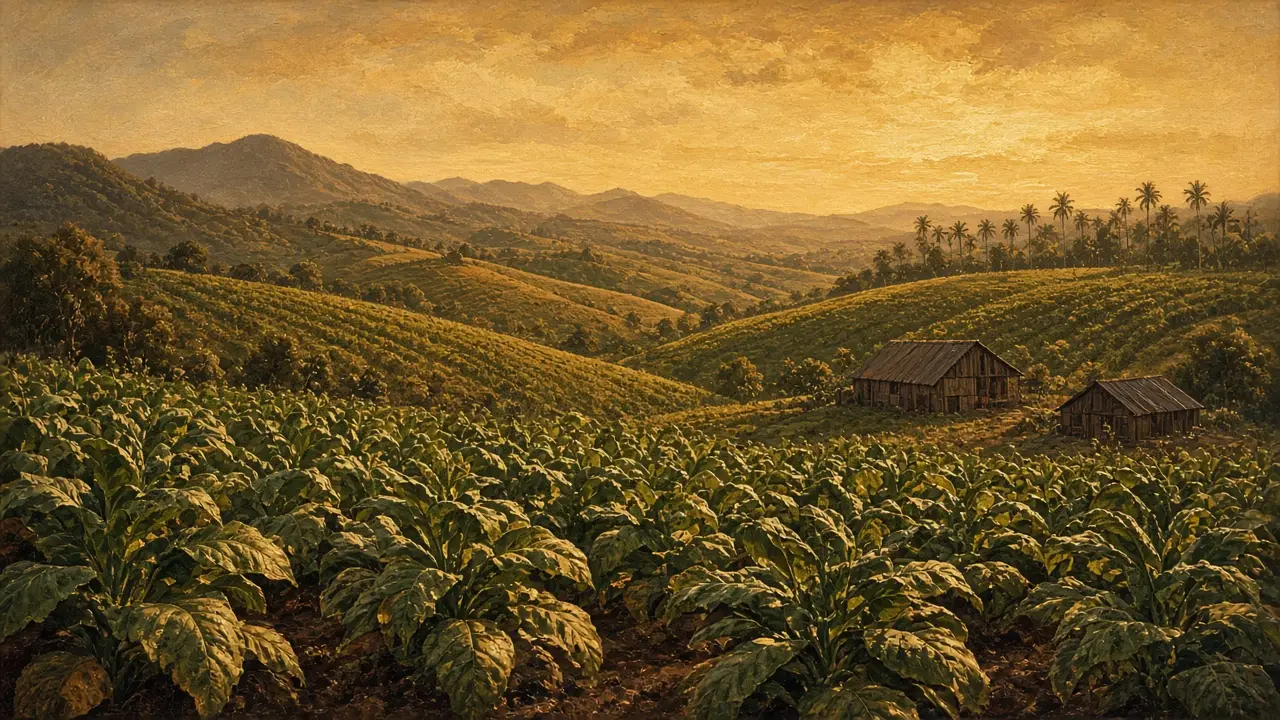
Most cigar leaf is Nicotiana tabacum. Growers care about oil, vein, and how the leaf burns—not seed oil.
Leaf position
- Volado (lower): burns well, milder, helps the cigar stay lit.
- Seco (middle): much of the aroma.
- Ligero (top): thicker, more nicotine, heavier flavor. Too much tastes bitter and hot.
Some factories mention rare top leaves such as medio tiempo. Yield is small and marketing is loud. The useful fact is simpler: higher leaves are usually stronger.
Shade and sun
Shade-grown leaf is tented. It is thinner and paler, and often becomes a fine wrapper—Connecticut Shade is the usual example. Sun-grown leaf is thicker and oilier. Habano and Corojo wrappers usually grow in the sun.
Soil and weather
Limestone, red clay, and volcanic soil appear in origin stories. Drainage, minerals, and night temperature matter more than poetry. Vuelta Abajo, the Cibao, Jalapa, Estelí, and Jamastrán are basins with long reputations. Disease, rain, and politics decide a year as often as terroir speeches do.
Harvest
Ripe leaves are primed from the bottom up. Stalk-cutting the whole plant is faster and more common for some binders than for the thinnest wrappers. A wrong ripeness is hard to fix in the barn.
Related chapters
Curing
How tobacco turns from green to brown in an air-curing barn, and why wrapper leaf is handled more gently.
Wrapper colors and types
From candela to oscuro, and common wrapper families: Connecticut, Habano, Corojo, San Andrés, Cameroon.
Countries and regions
A map of Cuba, the Dominican Republic, Nicaragua, Honduras, and the wrapper countries that feed modern blends.