Home · Making
Chapter III
How a cigar is made
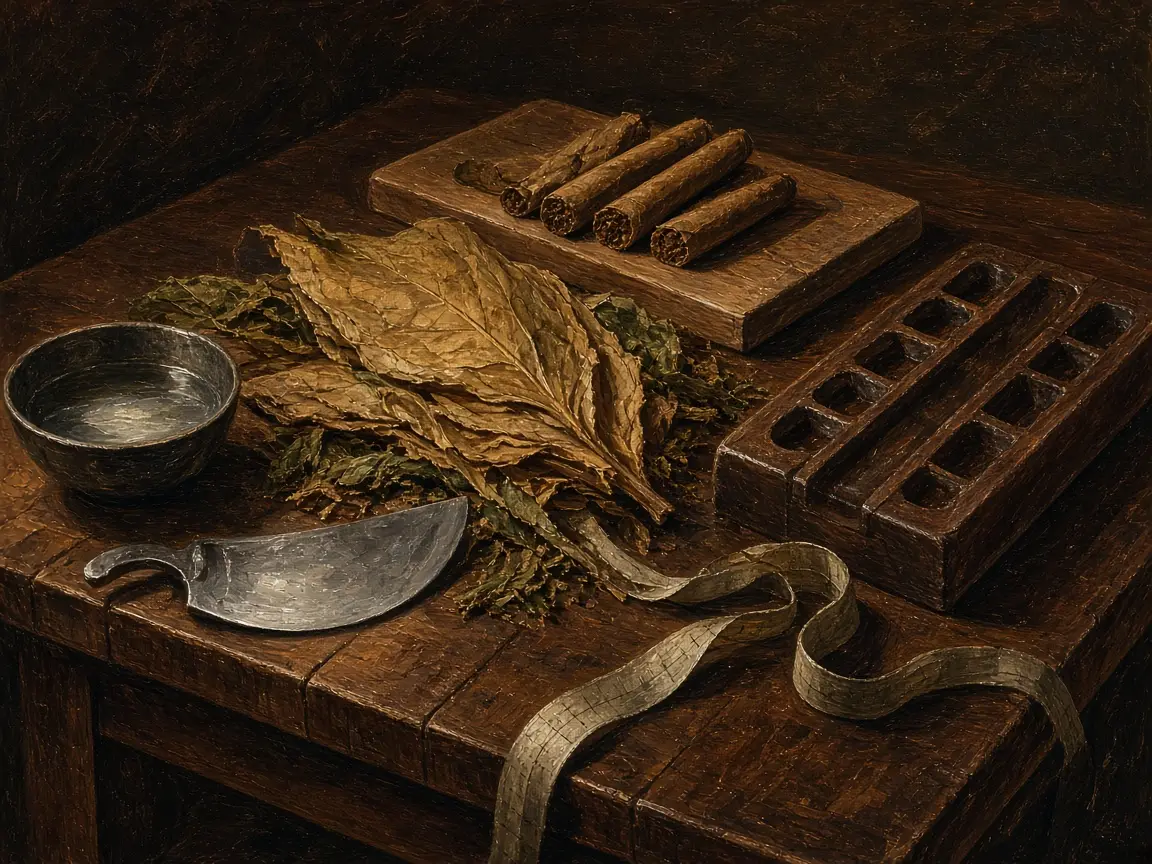
A cigar that burns slowly is agriculture, microbial work, and hand skill in a relay. Details change by region and factory. The skeleton is shared.
Growing
Seedbeds, shade, leaf position, ripeness.
Curing
Green leaf turning brown in the barn.
Fermentation
Piles, heat, and the loss of raw ammonia.
Rolling
Bunch, binder, wrapper, and the cap.
Aging
Rest in cedar before the box leaves.
A timeline
- Seedlings and transplanting: weeks to months.
- Field growth: often two to three months.
- Priming harvest from the bottom up: weeks.
- Curing: about a month to several months.
- Fermentation and resting leaf: months to years.
- Rolling, inspection, boxing.
- Finished-cigar aging: months, sometimes more than a year.
A year printed on a box may mean a blend idea, a wrapper crop, or only a series name. When there is no clear legal definition, this almanac treats it as brand language.
Related chapters
Growing and harvest
Volado, seco, and ligero; shade versus sun; soil and climate; why one plant can feed three roles in a blend.
Curing
How tobacco turns from green to brown in an air-curing barn, and why wrapper leaf is handled more gently.
Fermentation
How piled tobacco heats, is turned, loses ammonia, and how longer work helps make a darker maduro wrapper.
Rolling
How a roller builds the bunch, applies binder and wrapper, finishes a triple cap, and why draw tests matter.
Aging
Why finished cigars rest in cedar, and what home aging can and cannot do.