Making · Pile
Fermentation
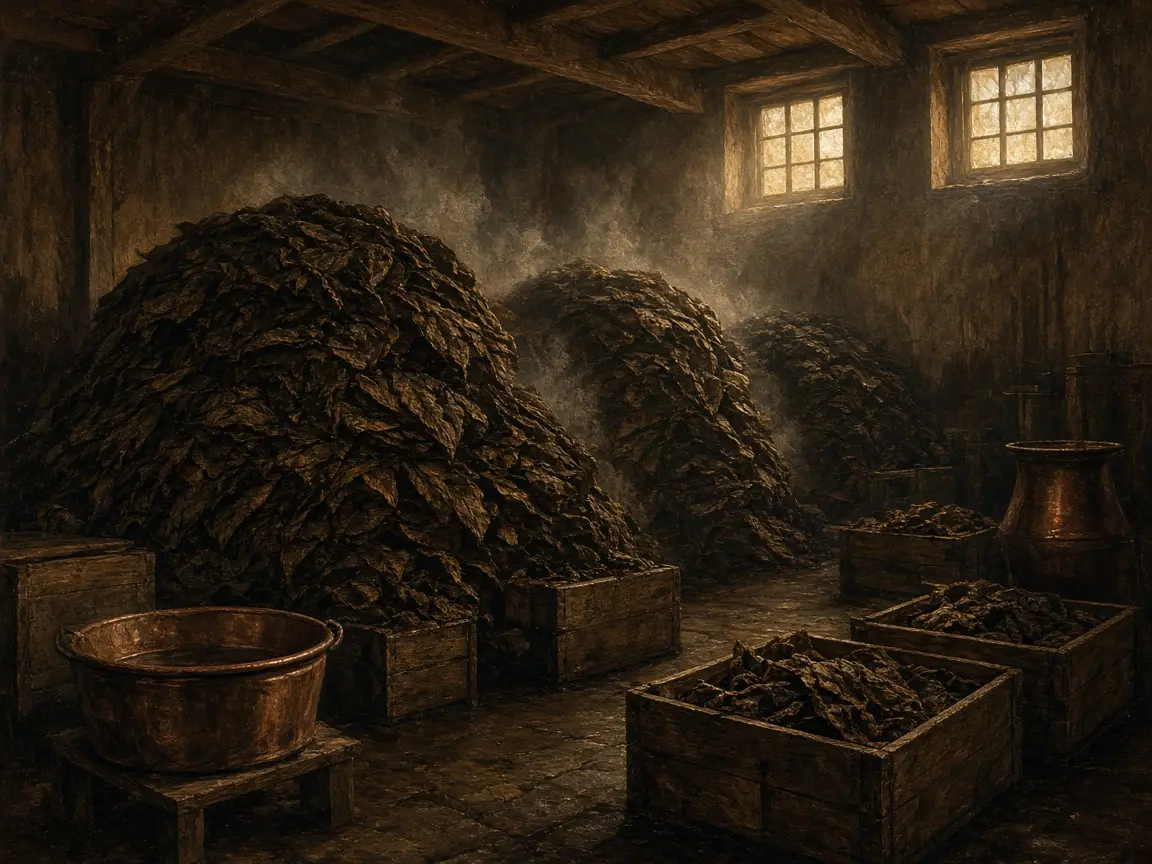
Fermentation stacks cured leaf into piles (pilones). Microbes and leaf enzymes work in heat and moisture. The core warms. Workers break and restack the pile so the leaf does not scorch. Ammonia, harsh notes, and some nicotine leave or change.
Heat and rounds
Factory talk often puts pile temperatures in a range around the mid-40s to low-50s Celsius, depending on leaf. Ligero takes more time. One round is rarely enough. Fine wrapper may go through two or more cycles with rest and resorting in between.
A maduro wrapper usually sees longer or warmer fermentation. It looks darker. Cocoa and sweet earth impressions are common. That is not sugar poured on the leaf. Over-fermentation can taste flat.
Not a whiskey barrel
Unless a brand states a barrel or infusion process, classic fermentation does not soak leaf in liquor. A “rum note” may be an ester association in the leaf, or it may be later flavoring. Both exist. They are not the same thing.
Related chapters
Curing
How tobacco turns from green to brown in an air-curing barn, and why wrapper leaf is handled more gently.
Wrapper colors and types
From candela to oscuro, and common wrapper families: Connecticut, Habano, Corojo, San Andrés, Cameroon.
Aging
Why finished cigars rest in cedar, and what home aging can and cannot do.